Black Sand, Basalt Columns, and the Wild Soul of Iceland’s Edge
You know that feeling when nature just slaps you in the face with beauty? That’s Vik. Nestled on Iceland’s southern coast, this tiny village is a gateway to otherworldly landscapes—towering sea stacks, roaring waves, and black sand beaches that stretch like ink across the earth. I came for the views, but stayed for the raw, untamed energy. If you’re chasing real, unfiltered nature, this is where Iceland bares its soul. More than a stop on the popular South Coast route, Vik offers an immersive encounter with elemental forces—where the land feels alive, shaped by fire and water, wind and time. It’s not just a destination; it’s a sensation.
Arrival in Vik: First Impressions of a Tiny Village with Massive Energy
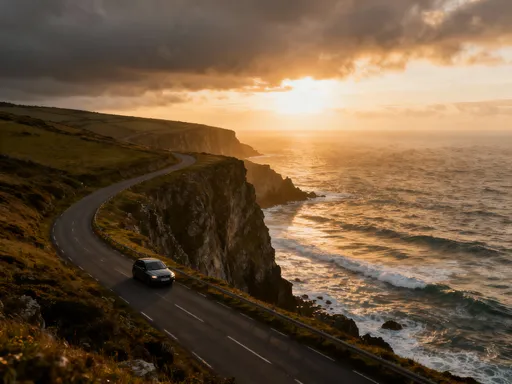
Driving toward Vik from Reykjavik or the Golden Circle, the landscape undergoes a quiet transformation. The well-tended green fields near the capital give way to vast, open spaces marked by lava fields and moss-covered hills. The road winds through rolling terrain, where sheep graze freely and isolated farmhouses appear like specks against an immense sky. There are no billboards, few signs of commercialization—just the steady rhythm of the journey and the growing sense of remoteness. Vik, with a population of fewer than 400, feels less like a town and more like a pause in the wilderness—a sheltered spot where travelers gather to witness what lies beyond.
As you approach, the first striking feature is the contrast between the village’s modest scale and the dramatic scenery that surrounds it. A single main road cuts through the settlement, lined with guesthouses, a church with a distinctive steeple, and a few cafés serving coffee and homemade soup. But it’s what lies just outside—Reynisfjara Beach, the Dyrhólaey Peninsula, and the vast Atlantic—that draws visitors. The air feels crisper, charged with a kind of quiet intensity. Clouds move fast across the sky, casting shifting shadows over the land, and the wind carries the distant roar of the sea. This is not a place of comfort or convenience, but of connection—to nature in its most unrefined form.
Vik’s value lies in its role as a quiet base for deeper exploration. It doesn’t demand attention with bustling streets or attractions, but instead offers access to some of Iceland’s most powerful natural landmarks. Travelers often arrive tired from the drive, only to be re-energized by the atmosphere. The village doesn’t compete with the landscape; it defers to it. And in that humility, there’s a kind of dignity—a reminder that some places exist not for us, but alongside us, indifferent and magnificent.
Reynisfjara Beach: Where the Atlantic Roars Against Black Sand
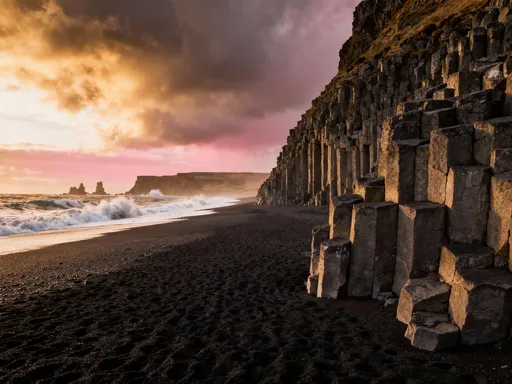
Just a short walk from the edge of Vik, Reynisfjara Beach unfolds like a scene from another planet. The black sand, formed from cooled volcanic lava ground down by the sea, stretches in a wide arc bordered by towering basalt columns and dramatic sea stacks. The most prominent of these, Reynisdrangar, rise like ancient sentinels from the churning water. According to local legend, they are trolls caught by the morning sun while trying to drag a ship to shore—a story that feels believable in this mythic landscape. The beach is not just visually stunning; it’s a full sensory experience. The sound of waves crashing with relentless force, the cold wind sweeping in from the ocean, and the sharp scent of salt in the air create an atmosphere that is both exhilarating and humbling.
Walking on the sand, you notice its texture—fine, almost silky, yet heavy underfoot. Unlike golden beaches shaped by coral and shells, this sand is a product of volcanic fire, a reminder that Iceland sits atop one of the world’s most active geological zones. The basalt columns, arranged in near-perfect hexagons, were formed by the slow cooling of lava flows, a process that took thousands of years. They stand like the pillars of a ruined cathedral, eroded by wind and water but still imposing. Nearby, sea caves hollowed into the cliff face add to the sense of ancient drama, their entrances dark and mysterious, echoing with the rhythm of the surf.
Yet for all its beauty, Reynisfjara demands respect. The waves here are powerful and unpredictable. So-called 'sneaker waves'—sudden, larger waves that surge far beyond the normal line—can sweep across the beach without warning. Signs in multiple languages warn visitors to stay at least 30 meters from the water’s edge, and rangers occasionally patrol the area. These warnings are not exaggerations; accidents have occurred. But when observed with care, the beach offers a safe and unforgettable experience. Watching the Atlantic collide with the land, sending plumes of spray into the air, is to witness nature’s raw power in motion—a display that no photograph can fully capture.
Dyrhólaey Peninsula: Cliffs, Arch, and Puffin Glimpses
Rising just east of Vik, the Dyrhólaey Peninsula offers a striking contrast to the low-lying beach. A short but steep hike leads to the top of a 120-meter-high promontory that juts into the sea, providing panoramic views of the coastline. From this vantage point, you can see the full sweep of Reynisfjara, the village of Vik nestled behind it, and the endless expanse of the North Atlantic. The most iconic feature is the massive sea arch, Dyrhólaey itself, which frames the ocean like a natural window. Carved by centuries of erosion, the arch stands as a testament to the patient but relentless work of wind and water.
The trail across the peninsula is well-maintained and accessible to most travelers, though the wind can make walking challenging, especially in winter. Along the way, birdwatchers may spot fulmars, guillemots, and kittiwakes nesting in the cliffs. During summer months—roughly from late May to mid-August—there is a good chance of seeing puffins. These small, colorful birds with orange beaks nest in burrows along the grassy edges, often waddling comically between rocks. While sightings are never guaranteed, their presence adds a touch of charm to the rugged scenery. Binoculars help, but even without them, the sheer number of nesting sites suggests a thriving colony.
At the end of the trail stands an old lighthouse, painted white with a red roof, standing sentinel over the sea. Though no longer manned, it remains a symbol of human presence in a place defined by nature’s dominance. The structure is photogenic, but the real draw is the view—south over the black sand, east toward the distant glaciers, and west along the wild coast. On clear days, the horizon seems infinite. It’s a place that encourages stillness, inviting you to pause and absorb the scale of what surrounds you. The wind, the light, the movement of the waves—all contribute to a sense of being on the edge of the world.
Hidden Hike: The Trail to Hálsanefshellir Cave and Beyond
For those willing to venture off the main paths, a lesser-known trail leads from the eastern end of Reynisfjara toward Hálsanefshellir, a sea cave carved into the cliffside. This route is not heavily promoted, and for good reason—it requires attention to footing and awareness of tides. But for travelers seeking solitude and a deeper connection with the landscape, it offers a rare reward. The path begins on marked gravel, winding through patches of moss and hardy coastal grasses. The sound of the main beach fades, replaced by the softer crunch of gravel underfoot and the distant murmur of waves.
As you move east, the coastline becomes more rugged. Jagged rock formations rise from the surf, and small coves open up like hidden chambers. Hálsanefshellir itself is modest in size but striking in atmosphere. The cave entrance is framed by basalt columns, and inside, the light filters in from above, casting shifting patterns on the wet stone floor. At high tide, the cave may be partially submerged, but at low tide, it’s possible to step inside and feel the cool air, listen to the echo of water lapping against the walls. It’s not a grand cavern, but a quiet sanctuary—a place where the sea breathes in and out with the rhythm of the tides.
Beyond the cave, the trail continues along a narrow ridge with steep drops on either side. Here, the sense of exposure is palpable. The wind is stronger, the views more expansive. To the south, the ocean stretches to the horizon; to the north, the green hills of the interior roll inland. Few visitors make it this far, and the solitude enhances the experience. You’re not just observing nature—you’re moving through it, part of its flow. The path eventually loops back toward Vik, but the return feels different. You’ve seen a side of the landscape that most miss—a quieter, more intimate version of Iceland’s wild heart.
Vik as a Base: Practical Tips for Exploring the South Coast
Despite its small size, Vik is a well-equipped stop for travelers exploring Iceland’s South Coast. Accommodations range from family-run guesthouses to modest hotels, many offering home-cooked breakfasts and warm, personal service. Booking in advance is strongly recommended, especially during summer months when tourist traffic peaks. Some properties include private bathrooms and kitchenettes, making them ideal for longer stays or families. For those camping, the local campground provides basic facilities, including showers and electricity, though reservations are often necessary in high season.
Dining options are limited but satisfying. Local cafés serve simple, hearty meals—think lamb soup, fresh bread, and Icelandic skyr with honey. One or two restaurants offer more formal dining, often featuring seafood caught along the coast. While choices are modest compared to Reykjavik, the food is wholesome and comforting after a day outdoors. Grocery options are minimal, so travelers planning self-catering should stock up in larger towns like Hella or Hvolsvöllur before arriving.
Practical amenities include a gas station, a small supermarket, and a visitor center with maps and weather updates. The area has reliable Wi-Fi in most accommodations, and electric vehicle charging stations are available, though wait times may occur during peak hours. Vik’s location makes it an ideal midpoint for multi-day itineraries—within driving distance of waterfalls like Skógafoss and Seljalandsfoss, glacier views at Sólheimajökull, and the volcanic landscapes of the Eldhraun lava field. Staying overnight allows visitors to experience Reynisfjara and Dyrhólaey in quieter morning or evening light, avoiding the midday crowds that arrive on day tours from the capital.
Weather and Light: How Nature Shapes the Experience
In Vik, the weather is not just a condition—it’s a central character in the experience. Conditions can change rapidly, with clear skies giving way to fog, rain, or even snow within minutes. This unpredictability is not a drawback but part of what makes the landscape so dynamic. A gray morning can transform into a golden afternoon as the sun breaks through the clouds, illuminating the black sand with an almost surreal glow. These fleeting moments—when light strikes the water just right or casts long shadows across the beach—are what many visitors remember most.
The quality of light in Iceland is unique, especially during the summer months when the sun barely sets. The 'midnight sun' creates a soft, continuous daylight that extends photography opportunities and allows for late-night walks along the coast. In spring and autumn, the 'golden hour' can last for hours, bathing the cliffs and sea stacks in warm, amber tones. Even in winter, when days are short, the low angle of the sun produces dramatic contrasts between light and shadow, enhancing the textures of the basalt and sand.
Travelers are often advised to dress in layers and carry waterproof gear, regardless of the forecast. The wind near the coast is persistent, and temperatures can feel much colder than readings suggest. But embracing the weather—rather than resisting it—deepens the connection to the place. A storm rolling in over the ocean, the mist rising from the lava fields, the sudden appearance of a rainbow after a shower—these are not interruptions to the trip, but essential parts of it. They remind us that nature operates on its own schedule, indifferent to human plans.
Why This Place Stays With You: The Emotional Weight of Raw Nature
Vik is not a destination you forget. Long after the photos are uploaded and the souvenirs put away, the memory of standing on that black sand beach, wind in your hair and waves thundering nearby, lingers. It’s not just the visual drama that leaves an impression, but the emotional resonance—the sense of standing at the edge of something vast and ancient. In a world where so much is curated, controlled, and predictable, Vik offers the rare experience of encountering nature on its own terms.
There’s a humility that comes with being in such a place. The scale of the ocean, the power of the waves, the age of the rocks—all serve to put human concerns into perspective. You realize how small you are, not in a discouraging way, but in a way that feels freeing. The constant motion of the sea, the slow erosion of the cliffs, the seasonal return of the puffins—these rhythms continue with or without us. And in that continuity, there’s a kind of peace.
Vik does not exist for tourism. It does not perform for cameras or cater to expectations. It simply is. And that authenticity is what makes it powerful. To visit is not just to see, but to feel—to be reminded of the beauty and strength of the natural world. For those willing to come with respect, patience, and open eyes, Vik offers more than scenery. It offers a moment of clarity, a breath of wild air, and a connection to the deeper pulse of the earth. It is, in the truest sense, a place where Iceland reveals its soul.