You Won’t Believe These Secret Spots in Évora
Évora, Portugal, is a hidden gem where ancient history meets Instagram gold. I didn’t expect to find such breathtaking views in a small UNESCO-listed town. From hilltop chapels to quiet rooftops overlooking terracotta roofs, every corner feels like a postcard. I’ve explored the alleys, climbed the best vantage points, and found where the golden light hits just right. If you're chasing beauty with soul, Évora delivers—quietly, powerfully, and undeniably.
Discovering Évora: More Than Just a Historic Town
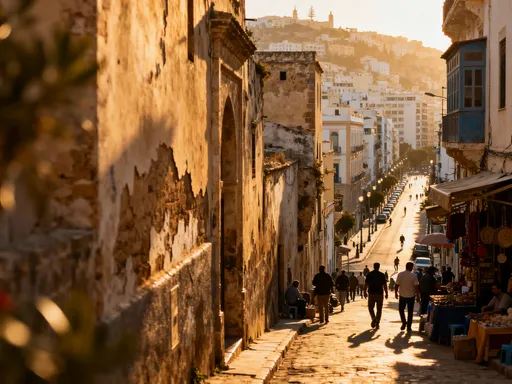
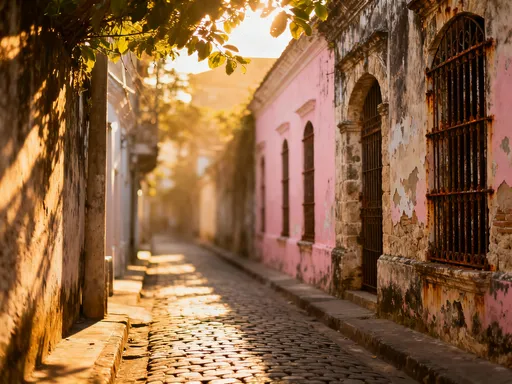
Évora is not the kind of place that shouts for attention. Nestled in Portugal’s Alentejo region, this UNESCO World Heritage site unfolds gently, like a story told in stone and sunlight. Its whitewashed buildings with azulejo-tiled facades and cobbled streets worn smooth by centuries invite slow walking, quiet observation, and deep appreciation. Unlike more crowded European cities, Évora doesn’t feel rushed. There are no endless queues or tourist-packed plazas. Instead, you’ll find a rhythm that matches your breath—a town that rewards those who wander without an agenda.
What makes Évora exceptional is not just its well-preserved Roman Temple or its medieval cathedral, though both are impressive. It’s the way history lives in the air—the scent of jasmine from hidden courtyards, the echo of footsteps on ancient paving, the golden hue that washes over the city at dusk. The compact size of the old town means you can cover most of it on foot in a single day, but to truly know Évora, you need more time. You need stillness. This is a destination where getting lost is not a mistake, but a method. Every alley opens into a small square, every doorway hints at a story, and every turn can lead to a view that stops you in your tracks.
For travelers seeking authenticity, Évora offers a rare balance. It is historic without being sterile, picturesque without feeling staged. The locals move through their days with calm dignity, sipping coffee at corner cafés or shopping at the bustling farmers’ market. There’s no pretense here—just life, lived simply and beautifully. This atmosphere makes it ideal for photography, not because every scene is perfectly composed, but because every moment feels genuine. Whether you’re holding a camera or simply observing, Évora teaches you to see differently—to notice light, texture, and silence as essential elements of beauty.
The Chapel of São Brás: A Quiet View with Big Impact
Just a short walk from the city center, perched on a gentle rise, the 16th-century Chapel of São Brás offers one of Évora’s most serene viewpoints. While most visitors flock to the Roman Temple or the Cathedral, this quiet sanctuary remains overlooked—exactly what makes it so special. From its elevated position, the view unfolds like a tapestry: a sea of terracotta rooftops cascading toward the distant plains, where olive groves and cork oak forests stretch into the horizon. The contrast between the warm reds of the tiles and the soft gold of the Alentejo landscape is especially striking in the early morning, when the sun casts long shadows and fills the air with a delicate, honeyed light.
Photographers will appreciate the clarity and depth of this vantage point. Unlike higher or more dramatic lookouts, São Brás offers an intimate perspective—one that feels personal, almost private. The chapel itself, with its simple whitewashed walls and modest bell tower, blends seamlessly into the scene. There are no railings or tourist signs to distract from the view. You can sit on the low stone wall, breathe in the crisp morning air, and watch as the city slowly wakes up. Smoke curls from chimneys, shutters creak open, and the first rays of sunlight catch the edges of rooftops, turning them into glowing amber.
Timing is key to making the most of this spot. Arriving between 7:30 and 8:30 a.m. ensures minimal foot traffic and optimal lighting. The soft, low-angle sun enhances textures and creates gentle gradients across the landscape. Shadows are long enough to add depth but not so harsh as to wash out details. For those using wide-angle lenses, the composition possibilities are rich: the curve of the rooftops leading the eye toward the horizon, the contrast between architectural geometry and natural terrain, or the subtle play of light on centuries-old stonework. But even without a camera, this place offers something rare—a moment of peace, a sense of connection to a place that feels timeless.
Praça do Giraldo at Golden Hour: Where History Meets Light
No visit to Évora is complete without spending time in Praça do Giraldo, the city’s vibrant heart. By day, this central square bustles with life—cafés spill onto the cobblestones, musicians play softly in the corners, and tourists browse local crafts at open-air stalls. But it is during golden hour, the hour before sunset, that Praça do Giraldo transforms into something magical. The limestone buildings surrounding the square glow in warm, buttery tones, their surfaces reflecting the low sunlight like natural canvases. The atmosphere shifts from lively to luminous, charged with a quiet energy that feels both festive and meditative.
This is when the square reveals its full photographic potential. The soft, diffused light wraps around the 16th-century fountain at the center, casting gentle highlights and subtle shadows. The façades of the surrounding buildings—some painted in ochre, others in creamy white—come alive with texture and depth. Street performers, often guitarists or folk singers, add movement and authenticity to the scene without overwhelming it. A couple sipping wine at a café, an elderly man reading a newspaper under a parasol, children chasing pigeons—these candid moments are woven into the golden light, creating images that feel both spontaneous and timeless.
To capture the best of Praça do Giraldo at sunset, it’s wise to arrive about 45 minutes before the sun dips below the horizon. This gives you time to explore different angles, test compositions, and settle into a good spot. A wide-angle lens works well for capturing the full sweep of the square, while a 50mm prime lens can isolate intimate details—the grain of the stone, the reflection in a window, the curve of a wrought-iron balcony. Don’t be afraid to shoot upward; the way the buildings frame the sky during golden hour creates a sense of enclosure and warmth. And remember, the magic doesn’t end when the sun sets. As twilight falls, the square is softly illuminated by vintage-style streetlamps, and the mood becomes even more romantic and atmospheric.
The Walls of Évora: Walking Through Time and Perspective
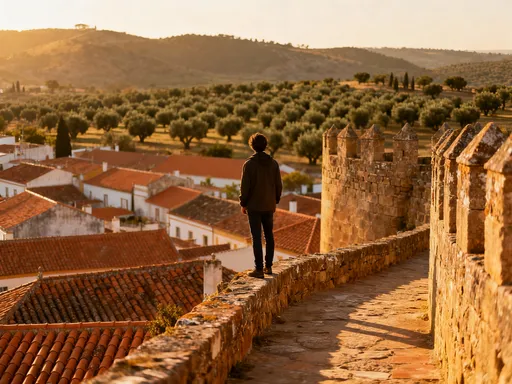
One of Évora’s best-kept secrets is its medieval city walls. While many historic towns have preserved fragments of their fortifications, Évora’s walls remain largely intact, offering a rare opportunity to walk along elevated pathways that once guarded the city. These stone ramparts, some sections dating back to the 14th century, encircle the old town and provide a continuous vantage point unlike any other. From up here, you’re not just looking at Évora—you’re moving through it, frame by frame, with ever-changing perspectives unfolding at every turn.
The walls are accessible from several points, but one of the most scenic stretches begins near the Porta de Moura gate in the southwest corner of the city. From there, the path winds gently upward, revealing views that shift from intimate to expansive. Looking inward, you see a patchwork of tiled roofs, chimney pots, and hidden gardens tucked behind high walls. Sunlight dances across the tiles, creating patterns that change with the time of day. Looking outward, the Alentejo countryside spreads in all directions—rolling hills dotted with cork trees, vineyards in neat rows, and distant farmhouses with red-tiled roofs. It’s a panorama that reminds you how deeply Évora is rooted in its landscape.
For photographers, the walls offer dynamic composition opportunities. The contrast between the rough, weathered stone of the ramparts and the soft, distant horizon creates a powerful visual tension. Low-angle shots that include the texture of the wall in the foreground can anchor an image, while long lenses compress the layers of the city, turning rooftops into abstract patterns. The best time to walk the walls is in the late afternoon, when the light is soft and even. The sun skims the horizon, casting long shadows and enhancing depth without creating harsh contrasts. As you walk, you’ll pass small archways, ancient towers, and quiet nooks where locals sometimes sit to read or sketch. These moments of stillness, sandwiched between views, are part of what makes the experience so memorable.
Sé Cathedral Rooftop Access: A Rare Elevated Moment
In most historic European cities, climbing to a cathedral rooftop is either impossible or strictly regulated. But in Évora, one of the great joys is the rare opportunity to ascend the interior stairs of the Sé Cathedral and emerge onto a narrow walkway that circles the roof. This 13th-century Gothic cathedral, with its imposing twin towers and rose window, dominates the city skyline. From ground level, it’s impressive. From above, it’s transformative. The climb is steep—a narrow, winding staircase with worn stone steps—but the reward is worth every breath.
Once on the rooftop, the view is panoramic and deeply personal. You’re at eye level with the cathedral’s bell towers, their stone tracery framing the sky. Below, the city unfolds in every direction: narrow alleys like veins, clusters of terracotta roofs, and the occasional flash of green from a hidden garden. The Roman Temple, one of Évora’s most famous landmarks, appears in the distance, its Corinthian columns standing in quiet dignity. The sense of elevation is not just physical but emotional—it feels like seeing the city from the perspective of history itself.
What makes this experience even more special is its accessibility. For a small entry fee, visitors can explore the cathedral and, if they wish, climb to the roof during opening hours. There are no glass barriers or modern additions to distract from the view. The stone balustrade is low and unobtrusive, allowing for clean, unobstructed shots. Photographers should bring a moderate telephoto lens to capture details of the rooftops and towers, and a polarizing filter can help reduce glare on sunny days. Because the space is narrow and not all visitors choose to climb, the rooftop tends to be quiet—ideal for contemplation or composing a careful shot. It’s one of those rare places where you feel both close to the past and completely present in the moment.
Almendres Cromlech at Dawn: Mysticism Meets Visual Drama
Just 8 kilometers north of Évora lies one of Portugal’s most enigmatic sites—Almendres Cromlech, a prehistoric stone circle older than Stonehenge. Arranged in oval formations across a grassy hillside, these weathered megaliths stand like silent sentinels, their origins lost to time. While the site is accessible during daylight hours, it is at dawn that Almendres reveals its true power. Few visitors arrive this early, which means you’ll often have the entire field to yourself. The air is cool and still, the sky shifts from indigo to soft pink, and a gentle mist sometimes clings to the ground, wrapping the stones in an ethereal glow.
This is a place where photography transcends documentation and becomes expression. The contrast between the ancient stones and the soft morning light creates images that feel both real and dreamlike. Long exposures can capture the delicate gradation of dawn, turning the sky into a gradient of color. Wide-angle shots emphasize the scale of the site, with rows of stones leading the eye into the distance. Close-ups reveal the texture of the granite—pitted, moss-covered, shaped by millennia of wind and rain. There’s a stillness here that’s hard to find elsewhere, a silence so deep it feels like the land itself is holding its breath.
Getting to Almendres requires a short drive or taxi ride from Évora. Parking is limited but sufficient, and a well-marked path leads to the main cluster of stones. There are no facilities on-site, so it’s wise to come prepared with water, a light jacket, and a tripod if you plan to shoot at low light. The walk from the parking area takes about five minutes, giving you time to settle into the mood of the place. While the site is open to the public, it’s important to treat it with respect—this is not just a photo location, but a sacred space, possibly used for astronomical or ritual purposes by Neolithic peoples. Standing among the stones at dawn, you can almost feel the weight of that history, not as a burden, but as a quiet invitation to slow down, to listen, and to see.
Why Évora’s Beauty Lives Beyond the Lens
The secret spots of Évora—whether a quiet chapel, a rooftop cathedral, or a prehistoric stone circle—are not just destinations. They are invitations to a different way of traveling. In an age of fast itineraries and filtered images, Évora reminds us that beauty is not something to be consumed quickly, but something to be lived with, sat beside, and understood slowly. The most powerful moments here are not the ones captured in photographs, but the ones felt in silence—the warmth of sun on stone, the sound of wind through cork trees, the stillness of a square before the day begins.
These experiences don’t just enrich a trip—they change the traveler. They encourage a mindset of presence, of curiosity without urgency. In Évora, you learn to appreciate not just what you see, but how you see it. The golden light at sunset, the mist at dawn, the texture of ancient walls—these are not just visual details, but emotional anchors. They connect you to a deeper rhythm, one that values stillness as much as sightseeing, reflection as much as discovery.
So while the viewpoints of Évora are undeniably photogenic, their true value lies in what they inspire. They invite you to slow down, to look closely, and to find wonder not in grand spectacles, but in quiet details. They remind you that the most meaningful travels are not about checking off landmarks, but about opening yourself to the soul of a place. And in a world that often feels rushed and noisy, that is a gift worth seeking. Évora doesn’t shout. It whispers. And if you listen, it will stay with you long after you’ve left.